

Food-sec.com – Indian cuisine offers bold flavors and aromatic spices that make any dinner memorable. Yet many home cooks struggle to recreate authentic dishes in their kitchens. The problem often lies in simple mistakes that are easy to fix.
This guide reveals eight common errors beginners make when preparing Indian dinner recipes. You will learn practical solutions to transform your cooking. From spice handling to cooking techniques, these tips will help you master easy dinner recipes with Indian flair.
Let us explore these mistakes and discover how to avoid them.
1. Using Old or Low Quality Spices
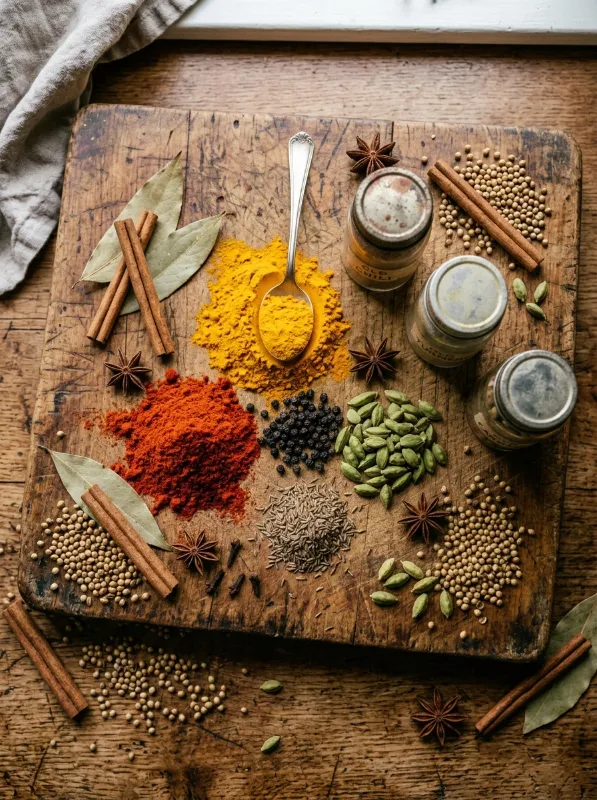
Fresh spices form the backbone of Indian cooking. Many beginners use spices that have sat in their pantry for years. Stale spices lose their essential oils and deliver flat, dull flavors.
Ground spices lose potency faster than whole ones. This mistake alone can ruin an otherwise well prepared dish.
Ingredients
- 2 tablespoons whole cumin seeds
- 1 tablespoon whole coriander seeds
- 1 teaspoon whole black peppercorns
- 4 green cardamom pods
- 2 cinnamon sticks
- 1 teaspoon whole cloves
Instructions
- Buy whole spices from stores with high turnover.
- Toast whole spices in a dry pan over medium heat for two minutes.
- Let them cool completely before grinding.
- Use a spice grinder or mortar to create fresh powder.
- Store in airtight containers away from light and heat.
- Replace ground spices every three months for best results.
Nutrition
| Nutrient | Amount Per Serving |
|---|---|
| Calories | 15 |
| Protein | 1g |
| Carbohydrates | 3g |
| Fat | 1g |
| Fiber | 1g |
2. Skipping the Blooming Process for Spices
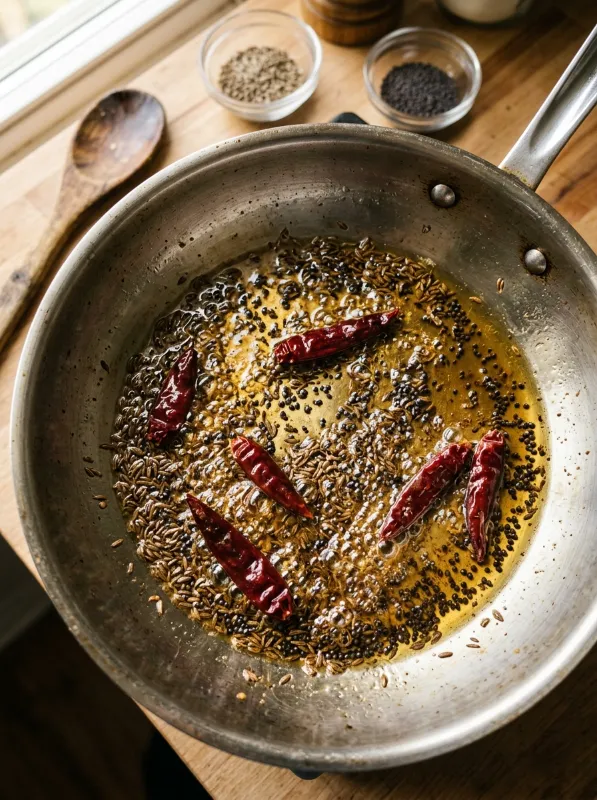
Blooming means cooking spices in hot oil or ghee before adding other ingredients. This step releases aromatic compounds and deepens flavor. Beginners often add spices directly to liquids or skip this step entirely.
The result tastes raw and harsh. Taking time to bloom spices transforms a basic dish into something special. If you enjoy Easy Dinner Recipes for Busy Moms, mastering this technique saves time while boosting taste.
Ingredients
- 3 tablespoons ghee or vegetable oil
- 1 teaspoon cumin seeds
- 1 teaspoon mustard seeds
- 2 dried red chilies
- 8 fresh curry leaves
- 1 teaspoon turmeric powder
Instructions
- Heat ghee in a heavy pan over medium heat.
- Add cumin seeds and mustard seeds first.
- Wait until they begin to pop and crackle.
- Add dried chilies and curry leaves quickly.
- Stir for thirty seconds until fragrant.
- Lower heat and add turmeric to prevent burning.
- Continue with your recipe immediately.
Nutrition
| Nutrient | Amount Per Serving |
|---|---|
| Calories | 120 |
| Protein | 0g |
| Carbohydrates | 2g |
| Fat | 13g |
| Fiber | 1g |
3. Burning Garlic and Ginger Paste
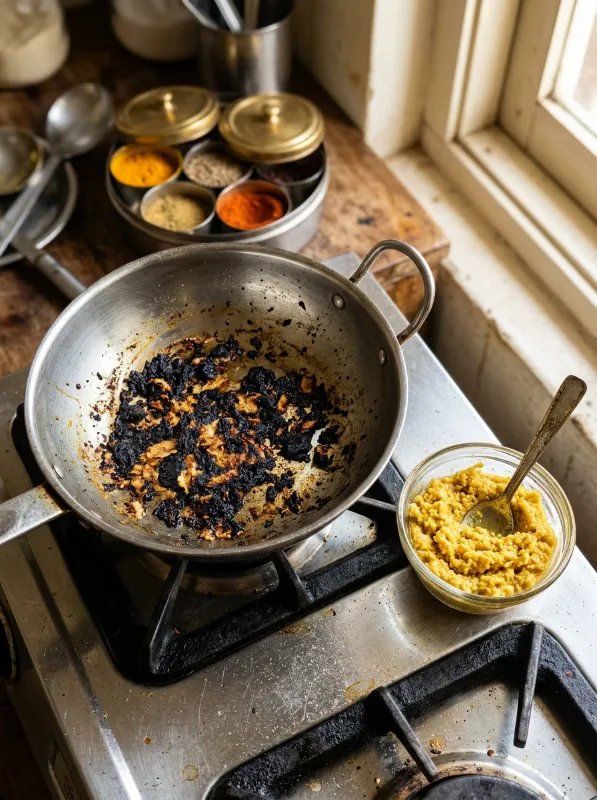
Garlic and ginger form the aromatic base of many Indian dishes. Beginners often add them too early or cook them over high heat. Burned garlic turns bitter and ruins the entire dish.
The timing matters greatly here. Add these aromatics after onions have softened to protect them from direct heat. This simple adjustment creates a smooth, savory foundation.
Ingredients
- 2 tablespoons fresh ginger minced
- 4 cloves garlic minced
- 2 large onions finely diced
- 3 tablespoons vegetable oil
- 1 teaspoon salt
Instructions
- Cook onions in oil over medium heat for eight minutes.
- Stir frequently until they turn golden brown.
- Reduce heat to medium low.
- Add garlic and ginger together.
- Stir constantly for two minutes only.
- Look for a pleasant aroma without any smoke.
- Add tomatoes or liquids immediately to stop cooking.
Nutrition
| Nutrient | Amount Per Serving |
|---|---|
| Calories | 95 |
| Protein | 2g |
| Carbohydrates | 12g |
| Fat | 5g |
| Fiber | 2g |
4. Rushing the Onion Cooking Process
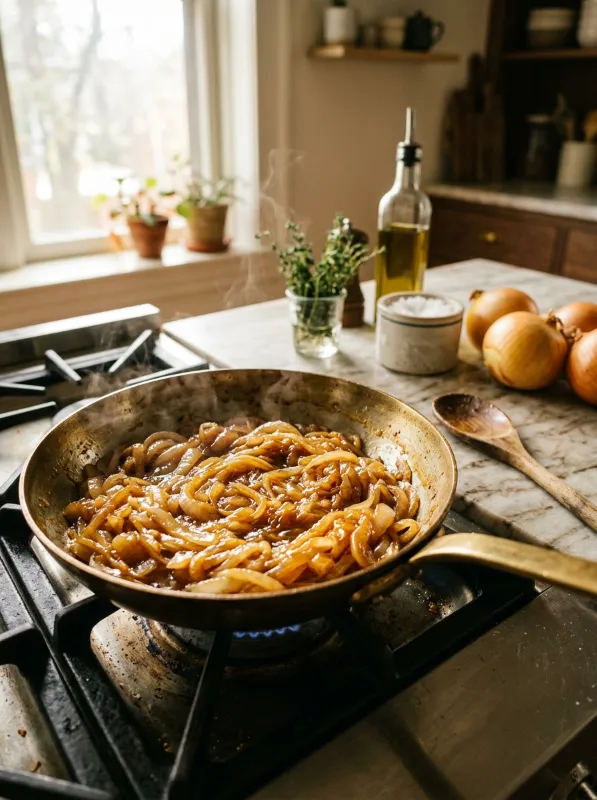
Properly caramelized onions provide sweetness and body to Indian curries. This process takes fifteen to twenty minutes on medium heat. Beginners often rush this step and end up with raw or unevenly cooked onions.
Patience here pays off tremendously. Golden brown onions create the rich base that defines authentic Indian flavor. Those who enjoy Cozy Dinner Recipes for Couples will appreciate how this technique elevates a romantic homemade meal.
Ingredients
- 3 large yellow onions thinly sliced
- 4 tablespoons ghee or oil
- 1 teaspoon salt
- 1 teaspoon sugar optional
Instructions
- Slice onions uniformly thin for even cooking.
- Heat ghee in a wide pan over medium heat.
- Add onions and spread them evenly.
- Sprinkle salt to draw out moisture.
- Stir every two to three minutes.
- Continue cooking for fifteen to twenty minutes.
- Add sugar in the last five minutes to help browning.
- Stop when onions reach deep golden brown color.
Nutrition
| Nutrient | Amount Per Serving |
|---|---|
| Calories | 145 |
| Protein | 2g |
| Carbohydrates | 15g |
| Fat | 9g |
| Fiber | 3g |
5. Adding Tomatoes at the Wrong Time
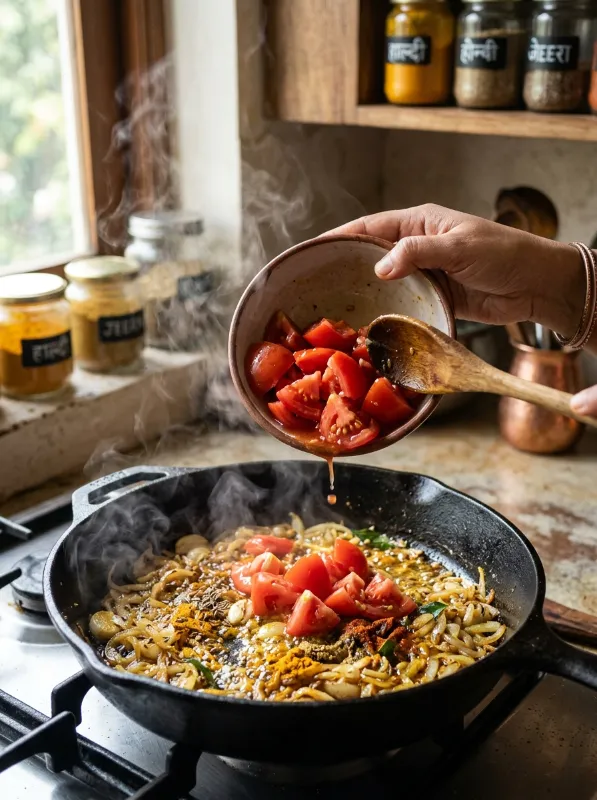
Tomatoes add acidity and brightness to Indian dishes. Adding them too early stops onions from browning properly. Adding them too late leaves a raw tomato taste.
Beginners often struggle with this timing. The tomatoes should go in after onions are fully cooked and spices are bloomed. Cook them until oil separates from the mixture.
This step creates the classic curry consistency.
Ingredients
- 3 ripe tomatoes pureed
- 2 tablespoons tomato paste
- 1 cup caramelized onion base
- 1 teaspoon red chili powder
- 1 teaspoon garam masala
- 1 teaspoon salt
Instructions
- Ensure onions are fully browned before proceeding.
- Add spice powders and stir for thirty seconds.
- Pour in tomato puree immediately.
- Stir well to combine all ingredients.
- Cook on medium heat for ten to twelve minutes.
- Watch for oil separating at the edges.
- Taste and adjust salt as needed.
- Add tomato paste for deeper color if desired.
Nutrition
| Nutrient | Amount Per Serving |
|---|---|
| Calories | 85 |
| Protein | 3g |
| Carbohydrates | 16g |
| Fat | 2g |
| Fiber | 4g |
6. Using the Wrong Amount of Water
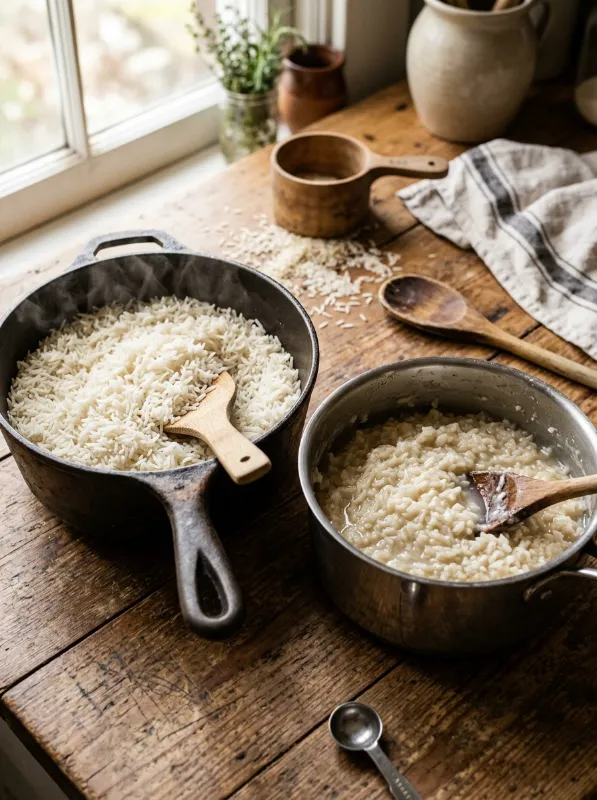
Water quantity affects the final texture of Indian dishes. Too much water creates a watery, bland curry. Too little water causes burning and uneven cooking.
Beginners often add water without thinking about the end result. Start with less water than you think you need. You can always add more later.
Consider this approach when planning Meal Prep Dinner for the Entire Week since proper consistency helps dishes store better.
Ingredients
- 1 cup prepared curry base
- 500g protein of choice
- 1 to 2 cups warm water
- 1 cup coconut milk optional
- Salt to taste
Instructions
- Start with half the water you think you need.
- Add protein to the curry base first.
- Pour in one cup of warm water.
- Cover and simmer on low heat.
- Check consistency every ten minutes.
- Add more water in small amounts as needed.
- Remember that sauce thickens as it cools.
- Finish with coconut milk for creamy dishes.
Nutrition
| Nutrient | Amount Per Serving |
|---|---|
| Calories | 180 |
| Protein | 18g |
| Carbohydrates | 8g |
| Fat | 9g |
| Fiber | 2g |
7. Overcooking Vegetables and Proteins
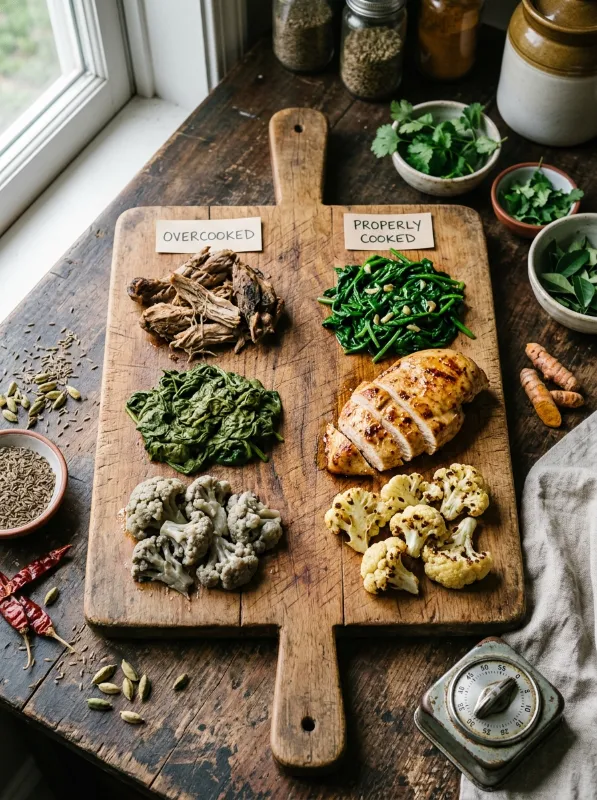
Indian dishes often feature tender vegetables and juicy proteins. Beginners frequently overcook these ingredients until they turn mushy. Chicken becomes dry.
Vegetables lose their color and texture. Different ingredients need different cooking times. Add hardy vegetables first and delicate ones last.
Remove proteins when just cooked through. This attention to timing creates restaurant quality results at home.
Ingredients
- 500g chicken thighs cubed
- 2 cups mixed vegetables
- 1 cup prepared curry sauce
- 2 tablespoons yogurt
- Fresh cilantro for garnish
Instructions
- Marinate chicken in yogurt for thirty minutes.
- Sear chicken pieces until just golden outside.
- Remove chicken and set aside.
- Add hardy vegetables like carrots first.
- Cook for five minutes before adding softer vegetables.
- Return chicken to the pan.
- Simmer only until chicken reaches internal temperature.
- Add delicate greens in the last two minutes.
Nutrition
| Nutrient | Amount Per Serving |
|---|---|
| Calories | 285 |
| Protein | 32g |
| Carbohydrates | 14g |
| Fat | 12g |
| Fiber | 4g |
8. Forgetting to Balance Flavors at the End
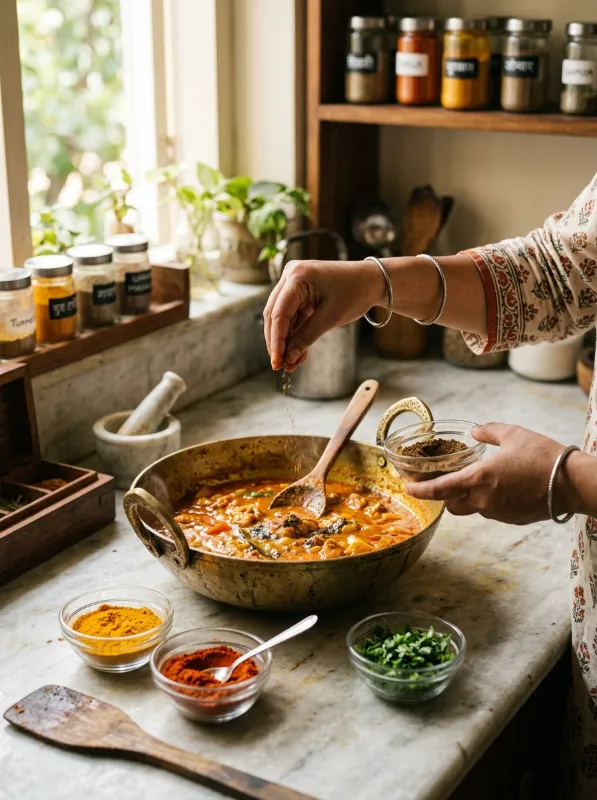
Indian cooking requires balance among salt, acid, heat, and sweetness. Beginners often forget to taste and adjust before serving. A squeeze of lemon can brighten a dull dish.
A pinch of sugar can tame excessive heat. Fresh herbs added at the end lift the entire flavor profile. This final step separates good cooks from great ones.
Even Simple Dinner Recipes for College Students benefit from this finishing touch that costs nothing extra.
Ingredients
- 1 prepared curry dish
- 1 lemon juiced
- 1 teaspoon sugar
- Fresh cilantro chopped
- 1 tablespoon butter or cream
- Garam masala for finishing
Instructions
- Taste the dish before making adjustments.
- Add salt if flavors taste flat.
- Squeeze lemon juice to brighten the dish.
- Add sugar if the dish tastes too acidic or spicy.
- Stir in butter or cream for richness.
- Sprinkle garam masala as the last spice.
- Garnish with fresh cilantro before serving.
- Let the dish rest for five minutes to meld flavors.
Nutrition
| Nutrient | Amount Per Serving |
|---|---|
| Calories | 45 |
| Protein | 1g |
| Carbohydrates | 5g |
| Fat | 3g |
| Fiber | 1g |
Cooking Indian dinner at home becomes easier when you avoid these eight common mistakes. Fresh spices make a huge difference in taste. Proper technique with onions and garlic builds authentic flavor foundations.
Timing matters for every ingredient you add to the pot. Take your time with each step and taste as you go. These lessons apply to any cuisine but prove especially important for Indian cooking.
Start with simple recipes and build your skills gradually. Your confidence will grow with each successful dish. Soon you will create restaurant quality Indian dinners in your own kitchen.
Enjoy the journey of mastering these aromatic and satisfying meals.