
Food-sec.com – Finding the best sheet pans for one-pan dinners can be harder than it looks. If you’ve ever stood over a sink scrubbing burnt bits off a flimsy baking sheet at 9 PM, you already know the truth: not all sheet pans are created equal. The right pan can mean the difference between golden, evenly cooked roasted chicken and a soggy, unevenly browned mess that nobody wants to touch. For one-pan dinners especially — where your protein, vegetables, and sometimes even your sauce are all riding on a single piece of cookware — pan quality matters a lot.
We’ve tested a range of sheet pans across different price points, materials, and sizes to find out which ones are actually worth your money. Whether you’re throwing together a quick weeknight sheet pan salmon or building out a full meal prep plan for the whole week, this guide breaks down everything you need to know before you buy.
What Makes a Great Sheet Pan for One-Pan Dinners?
Before we get into specific picks, it helps to understand what you’re actually looking for. A sheet pan built for one-pan dinners needs to do a few things well: conduct heat evenly, survive high oven temperatures without warping, and be easy enough to clean that you’ll actually want to use it again tomorrow.
Material is the most important factor. Heavy-gauge aluminum (typically 18-gauge or thicker) is the gold standard. It distributes heat more evenly than thin aluminum or nonstick pans, which tend to develop hot spots. Aluminized steel is another solid option — it’s more resistant to warping and holds up well at temperatures above 400°F, which is where most roasting happens.
Rim height matters more than people expect. A rimmed half sheet pan (18×13 inches) is the industry favorite for a reason — the raised edge keeps juices and drippings from spilling into your oven, and it gives you something to grip when pulling a hot pan out. Low-rimmed pans work fine for cookies, but for one-pan dinners with vegetables releasing liquid, you want at least a 1-inch rim.
Size is a personal call. The standard half sheet (18×13 inches) fits most home ovens and comfortably holds dinner for 4. If you’re cooking for one or two, a quarter sheet pan is more practical and heats up faster. If you’re feeding a crowd or batch-cooking, a full sheet pan works, but most home ovens can’t accommodate them.
Best Sheet Pans for One-Pan Dinners: Our Top Tested Picks
After testing pans at various price points, here are our honest recommendations.
1. Nordic Ware Natural Aluminum Half Sheet Pan
This is the one you’ll find in most professional baking kitchens, and for good reason. Made from natural aluminum with a reinforced corrugated surface, it heats exceptionally evenly and resists warping even at high temperatures. In testing, it produced the best browning on roasted vegetables — crispy edges, no steaming, no sogginess.
- Size: 18×13 inches (half sheet)
- Material: Natural aluminum
- Best for: Everyday roasting, high-heat cooking, meal prep
- Price range: $15–$20
It’s not nonstick, but that’s actually an advantage — the aluminum surface develops better browning (the Maillard reaction), and it’s safe to use with metal utensils. Cleanup is easy with a quick soak.
2. USA Pan Bakeware Half Sheet Pan
USA Pan makes pans with a nonstick coating that’s PTFE-free and reinforced with a ridged bottom for airflow. During testing, it performed nearly as well as the Nordic Ware for browning and was notably easier to clean. The ridges also help with airflow under food, which means slightly crispier undersides on chicken thighs and potatoes.
- Size: 18×13 inches
- Material: Aluminized steel with nonstick coating
- Best for: Families who want easy cleanup, sticky glazes, fish
- Price range: $25–$35
One caveat: nonstick pans require more care. Avoid metal utensils and don’t preheat them empty. But for busy weeknights when you want dinner done and dishes fast, it’s worth the extra cost.
3. Chicago Metallic Commercial II Jelly Roll Pan
This pan punches above its price point. It’s made from heavy-gauge steel with a nonstick coating and performed consistently well across multiple uses in testing. It handled everything from sheet pan salmon with asparagus to roasted chickpeas without sticking or warping.
- Size: 15.5×10.5 inches (jelly roll/three-quarter sheet)
- Material: Heavy-gauge steel, nonstick
- Best for: Smaller households, versatile use, value shoppers
- Price range: $12–$18
The slightly smaller size is a plus if you’re cooking for two — less space means food doesn’t spread out too thin and dry out before it browns.
4. Vollrath Wear-Ever Commercial Sheet Pan
If you’re serious about your one-pan dinners and cook more than a few times a week, the Vollrath is a restaurant-grade investment that will outlast any consumer pan. It’s thick, heavy, and practically indestructible. In testing it was the most consistent of all pans for even heat distribution.
- Size: 18×13 inches
- Material: Heavy-gauge aluminum (thicker than Nordic Ware)
- Best for: Frequent cooks, high-volume meal prep, long-term investment
- Price range: $30–$45
It’s heavy — noticeably so — but that weight is exactly what prevents warping and uneven cooking.
Nonstick vs. Uncoated Aluminum: Which Should You Get?
This is the question we get most often, and the honest answer is: it depends on what you’re cooking.
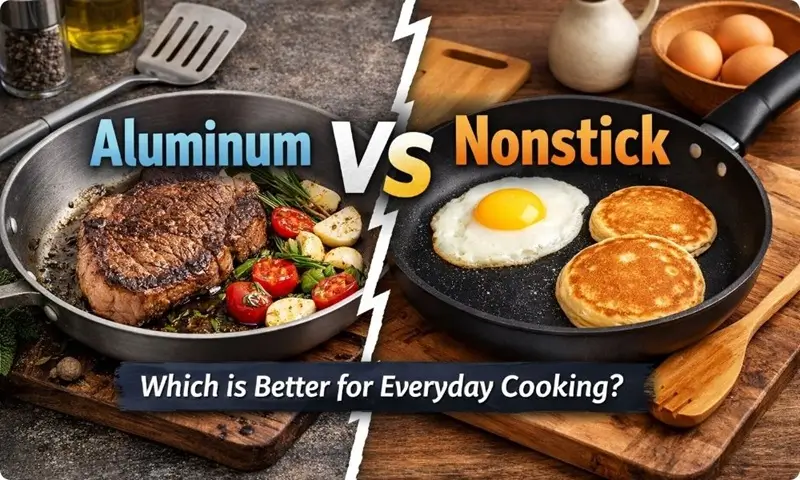
Uncoated aluminum is better for high-heat roasting (400°F and above), developing crispy crusts, and caramelizing vegetables. It’s also more durable long-term since there’s no coating to chip or scratch. The Nordic Ware and Vollrath pans fall here, and they’re the better choice if you do a lot of Mediterranean-style one-pan dinners with bold, dry rubs and high-heat roasting.
Nonstick makes cleanup faster and is better for delicate proteins like fish or egg-based dishes. Glazed recipes (honey garlic chicken, teriyaki salmon) also release more easily from nonstick surfaces. The tradeoff is that nonstick coatings have a shorter lifespan and require more careful handling.
For most people, owning one of each is the practical solution. A heavy aluminum half sheet for everyday roasting, and a nonstick sheet for fish nights and glazed proteins.
Sheet Pan Sizes Explained: Half, Quarter, and Full
A lot of confusion in pan shopping comes from unclear sizing terminology. Here’s a quick breakdown:
| Size | Dimensions | Best For |
| Full sheet | 26×18 inches | Commercial ovens only |
| Half sheet | 18×13 inches | Standard home cooking, families of 4 |
| Quarter sheet | 13×9 inches | 1–2 servings, toasting, small batches |
| Jelly roll | 15.5×10.5 inches | 2–3 servings, smaller kitchens |
For most one-pan dinner purposes, the half sheet is the right call. It’s the size most recipes are written around, it fits standard oven racks with room for airflow, and it’s large enough for a full dinner for four without crowding — which is the number-one mistake that leads to steaming instead of roasting.
How to Get the Most Out of Your Sheet Pan Dinners
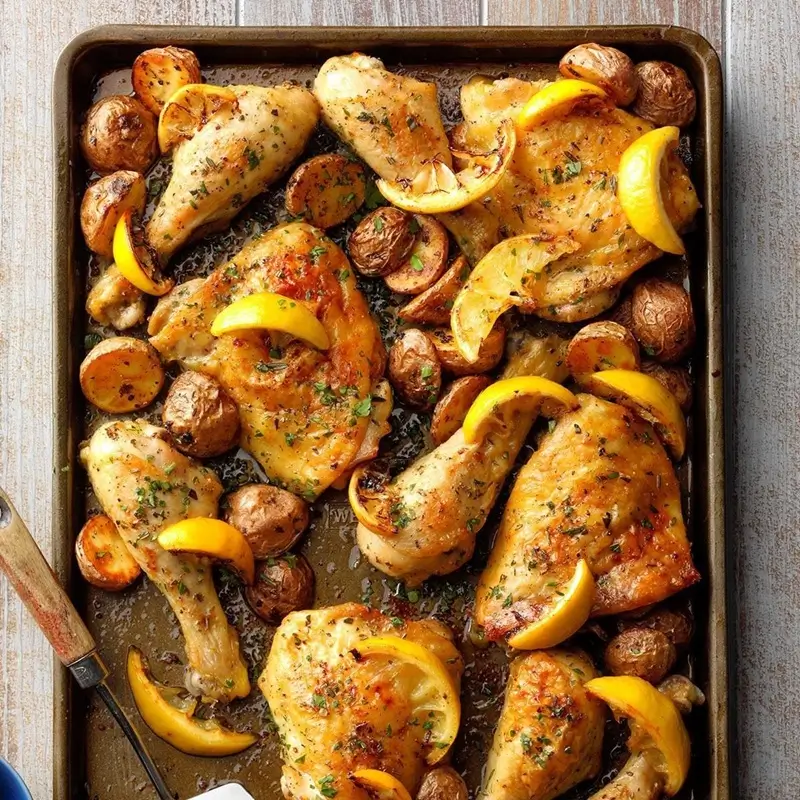
Even the best sheet pan can’t save you from a few common mistakes. Here’s what separates great one-pan results from mediocre ones:
Don’t overcrowd the pan. This is the single biggest mistake. When vegetables or proteins are too close together, they steam instead of roast. Leave at least an inch of space between pieces, and if you have a lot of food, use two pans. If you’re looking for ideas that are specifically designed around this principle, the recipes in this complete easy dinner recipes collection are a good starting point.
Use the right temperature. Most one-pan dinners do best at 400–425°F. Lower temperatures result in longer cooking times and less browning. Higher temperatures work for specific proteins (whole chicken pieces, for instance) but require more attention.
Preheat the pan. Sliding food onto a hot pan instead of a cold one gives you an immediate sear on the underside. This is especially useful for sheet pan chicken thighs and root vegetables.
Season and oil generously. Sheet pan dinners need a good coating of oil to promote browning. A tablespoon or two for a full pan of vegetables is not too much — it’s about right.
Know what to cook together. Dense vegetables like carrots and beets take longer to cook than broccoli or asparagus. Either cut dense vegetables smaller, or stagger when you add things to the pan. For structured ideas on how to think about pairings and timing, these 25 quick dinner recipes cover some clever combinations that work well on a single pan.
Sheet Pan Dinner Ideas to Try With Your New Pan
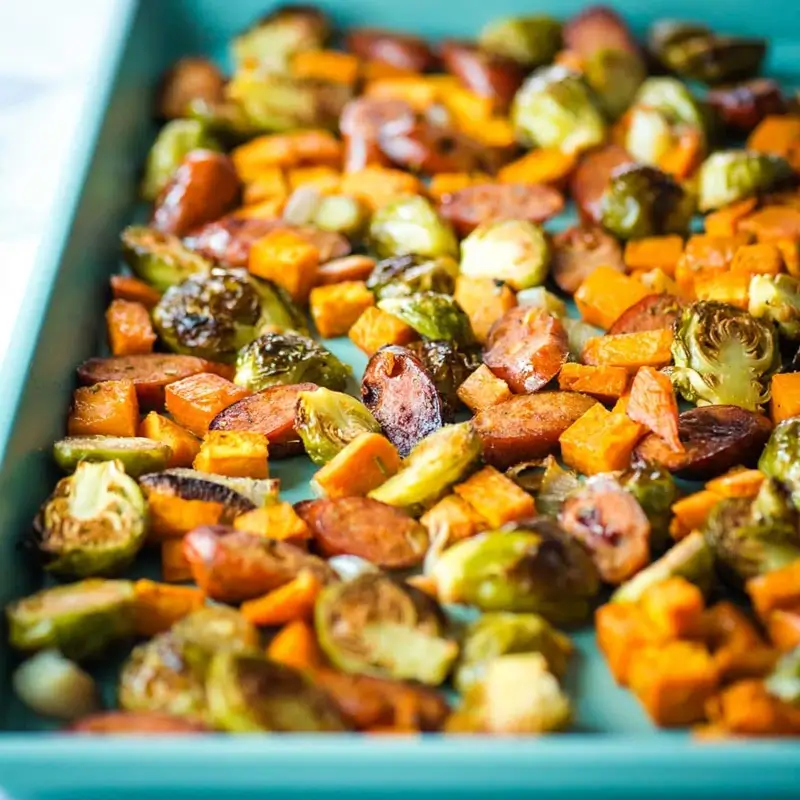
Once you have a solid sheet pan, the recipes open up fast. Here are a few directions worth exploring:
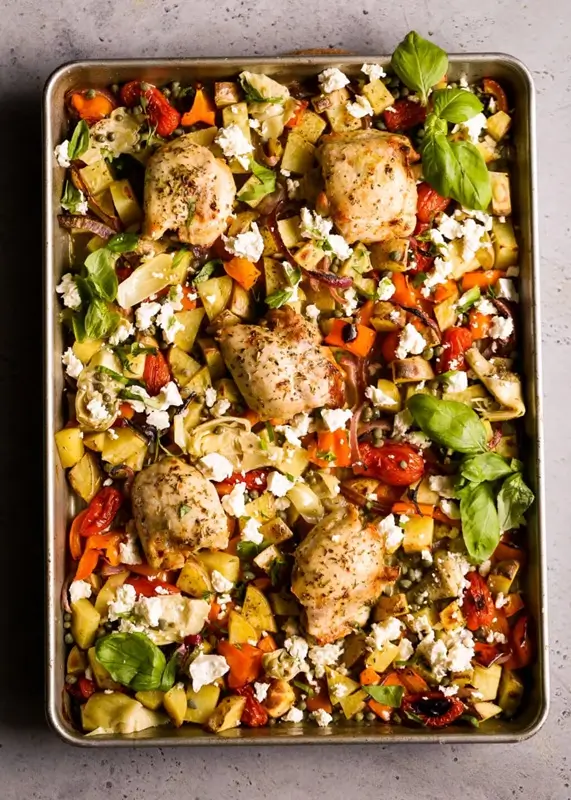
Roasted chicken thighs with root vegetables remain one of the most foolproof sheet pan dinners around. Bone-in, skin-on thighs at 425°F for about 35 minutes, surrounded by cubed potatoes and carrots, is practically impossible to mess up with a heavy-gauge aluminum pan.
Sheet pan salmon with asparagus is a fast weeknight classic — 12 to 15 minutes at 400°F and dinner is done. Nonstick pans shine here because salmon skin wants to stick.
For something more globally inspired, the flavor profiles in these colorful Mediterranean one-pan dinners work brilliantly on a sheet pan — za’atar chicken, roasted chickpeas, and herb-dressed vegetables all benefit from the dry, high heat that a good sheet pan provides.
Caring for Your Sheet Pan: What Actually Works
The lifespan of a sheet pan depends almost entirely on how you care for it. A few rules that extend life significantly:
For uncoated aluminum, avoid soaking in soap water for extended periods — it can cause pitting. Use a paste of baking soda and hydrogen peroxide to clean stubborn stains, or a Bar Keepers Friend scrub. Don’t run aluminum pans through the dishwasher; the harsh detergents cause discoloration.
For nonstick pans, never use metal utensils and don’t stack other pans directly on top of them. Line with parchment paper when possible — it protects the coating and makes cleanup nearly instant. Hand wash only.
Both types benefit from lining with aluminum foil or parchment paper for messy recipes (anything with sticky glazes, acidic tomatoes, or cheese). It’s not lazy — it’s just smart cooking.
Conclusion
The best sheet pan for one-pan dinners depends on how you cook. If you’re roasting most nights at high heat and want something that will last a decade, the Nordic Ware Natural Aluminum Half Sheet Pan is the easy answer — it’s affordable, durable, and performs at or near the level of pans costing three times as much. If cleanup speed matters more to you, the USA Pan nonstick is worth the upgrade.
For the most versatile setup, own both. A half sheet aluminum pan for everyday roasting, a nonstick for fish and glazed recipes. Total spend: under $60, and you’ll be set for years.
Ready to cook better weeknight dinners? Start with the right pan, then explore the recipe ideas in our easy dinner recipes collection — every recipe works beautifully on the sheet pans reviewed here.
FAQ
What is the best sheet pan for one-pan dinners? The Nordic Ware Natural Aluminum Half Sheet Pan is the top pick for most home cooks. It distributes heat evenly, resists warping at high temperatures, and costs under $20. For easier cleanup, the USA Pan nonstick half sheet is a close second.
What size sheet pan should I use for one-pan dinners? An 18×13-inch half sheet pan is the standard size for one-pan dinners. It fits most home ovens and comfortably holds dinner for four people without overcrowding, which is key for getting a good roast rather than a steam.
Are nonstick sheet pans better than uncoated aluminum for one-pan dinners? Neither is universally better — it depends on your cooking style. Uncoated aluminum produces better browning and is more durable long-term. Nonstick sheet pans are easier to clean and better for delicate proteins like fish or sticky glazed recipes.
Why does food steam instead of roast on my sheet pan? The most common reason is overcrowding. When pieces of food are too close together, moisture can’t escape and the food steams rather than roasts. Leave space between pieces, and use two pans if needed. High enough oven temperature (400°F+) also helps.
Can I use a sheet pan for meal prepping dinners for the week? Absolutely. A half sheet pan is one of the most practical tools for batch cooking. You can roast two or three different proteins and vegetables in one session. For a full guide on how to approach this, check out this step-by-step meal prep guide.